




What we do
To contribute to the localization and accelerate the 2030 Agenda for Sustainable Development, the Local2030 Coalition helps the United Nations system to engage systematically with local and regional governments, national authorities, the private sector, civil society and community-based organizations. Acting as a convener, connector and accelerator, the Coalition strengthens coherence across the United Nations system and connects policy, capacity, finance, knowledge and evidence through a shared delivery architecture.
Through these collaborative networks, the Coalition drives multi-stakeholder action, incubates innovative local solutions, facilitates knowledge exchange and mobilizes resources to accelerate achievement of the Sustainable Development Goals, ensuring that no one and no place is left behind.
Guided by its 10-year strategy, the United Nations Local2030 Coalition focuses on three key areas:
- Empowering local actors: Raising awareness on the importance of localizing the Sustainable Development Goals and amplifying the voices of local actors in global discussions.
- Local action and local finance: Scaling up local sustainable development solutions implemented by the Coalition participating United Nations entities, constituencies and partners.
- Tracking local impact: Tracking progress and impact using data-driven tools, methodologies and reporting to ensure accountability.

Local change starts with local leadership. We work to equip local governments, community organizations, civil society and grassroots leaders with the tools, knowledge and partnerships they need to drive sustainable development.

Achieving sustainable development requires turning commitments into concrete action. We support the design and implementation of locally driven initiatives that address social, economic and environmental priorities.

Measuring progress is essential to driving meaningful and accountable change. We support local actors in tracking, analyzing and communicating the impact of their work.
Empowering local actors
Bridging global policy with local perspectives and building capacity across the United Nations system
Through capacity building, technical support and collaborative platforms, we enable local actors to design and implement solutions that respond to their unique challenges and opportunities. By strengthening local ownership and leadership, we ensure that development efforts are inclusive, resilient and sustainable.
Strategy and purpose
We integrate local development stakeholders as fundamental drivers of global agendas, ensuring their perspectives shape international milestones. By creating structured opportunities and deepening multi-stakeholder engagement, elevating local leadership in decision-making processes and embedding localization across United Nations Country Teams, we build consensus and foster a unified approach to accelerate the implementation of the 2030 Agenda for Sustainable Development.
Tools
We secure dedicated space for local leaders at high-level United Nations summits, including the High-Level Political Forum on Sustainable Development and the United Nations Climate Change Conferences. Additionally, we drive strategic advocacy campaigns, host coalition-led dialogue platforms, mainstream localization guidelines across country teams worldwide and align operational training with the United Nations 2.0 modernization agenda.
Scalling up local action and finance
Unlocking catalytic funding and subnational investments for territorial impact
We work with partners to mobilize and align financial resources that empower local communities. This includes supporting innovative financing mechanisms, strengthening access to funding, and improving the effectiveness and transparency of local investments.
Strategy and purpose
We expand and scale context-specific development solutions and financing mechanisms to maximize tangible impact for local communities. By connecting innovative local initiatives with catalytic funding and global knowledge networks, we unlock the resources necessary for lasting territorial transformation.
Tools
We deploy catalytic seed funding through United Nations flagship offerings, establish thematic working groups for localized Sustainable Development Goal transitions and mobilize subnational investment tools through major financing mechanisms such as the Seville Platform for Action.
Tracking local impact
Strengthening evidence-based decisions through localized tracking frameworks and dialogue
Through data systems, monitoring tools and evidence-based approaches, we help communities understand what works and where improvements are needed. This enables better decision-making, strengthens accountability and builds trust among stakeholders.
Strategy and purpose
We strengthen the evidence, learning and accountability needed to improve SDG localization. By connecting territorial evidence from localized data collection with programme design and national and global reporting, we provide territories with robust analytical tools, enable evidence-based decision-making and foster collective, transparent reviews of sustainable development progress.
Tools
We empower territories to conduct Voluntary Local Reviews, track progress using open-data dashboards and systematically measure localization progress across United Nations programming through the SDG Localization Marker. Voluntary National Reviews (VNRs), Voluntary Local Reviews (VLRs), and Voluntary Subnational Reviews (VSRs) dialogues and peer learning connect local and regional reviews with national reporting and global follow-up.
Milestones in Localizing the SDGs
Discover how the Local2030 Coalition mobilizes global partnerships, empowers local action, and unlocks catalytic financing to advance the Sustainable Development Goals worldwide:
2,000+ key stakeholders engaged through the Road to... The Local Way consultations and processes.
US$ 44 million in catalytic financing programmed across 38 countries via the Joint SDG Fund localization portfolio—unlocking up to US$ 235 million in potential leverage.
US$ 36 million in additional financing secured for 12 country programmes, driving up to US$ 340 million in potential co-financing.
100+ universities and research centres connected globally through our Knowledge and Scientific Network.
-
Events
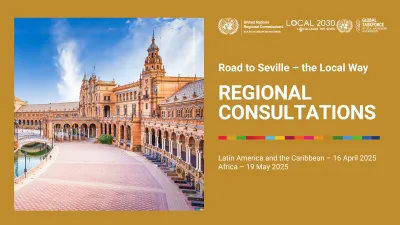
Road to Seville: the Local Way – Regional Consultations
As part of the Road to Seville: the Local Way process, the United Nations Regional Commissions and the Local2030 Coalition, in collaboration with the Global Taskforce of Local and Regional Governments, are co-organizing a series of regional consultations (Latin America and the Caribbean and Africa) on 16 April and 2 May 2025. These consultations will convene public and private sector experts to highlight the critical role of local finance in driving sustainable development through concrete actions and best practices. -
Library
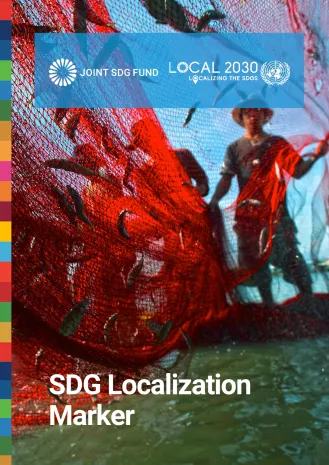
SDG Localization Marker
LibrarySDG Localization Marker
The SDG Localization Marker was developed through a collaborative process led by the Joint SDG Fund and the Local2030 Coalition, with contributions from representatives of international and regional organizations, national and local and regional governments, civil society, academia, youth organizations, and the private sector. These stakeholders shared their expertise and perspectives throughout the consultation, review, and validation process. The Joint SDG Fund and the Local2030 Coalition also wish to acknowledge the valuable support of the Government of Spain in developing the SDG Localization Marker. They further extend their appreciation to the United Nations entities that are members of the Local2030 Coalition— DCO, FAO, ILO, IOM, UN DESA, UN Women, UN-Habitat, UNDP, UNEP, UNFPA, UNHCR, UNICEF, WHO, and the UN Regional Economic Commissions—as well as to the Coalition's partners, for their technical guidance, coordination support, and editorial contributions throughout the development process. -
Library
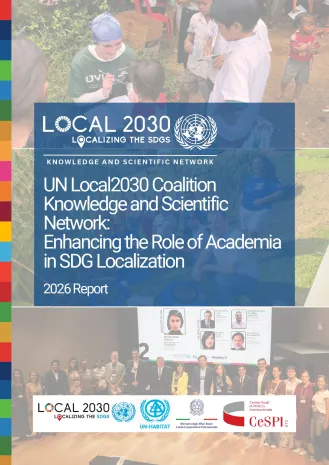
UN Local2030 Knowledge and Scientific Network 2026 Report: Evidence of Academia’s Transformative Role in Driving SDG Localization
At a time when recent reports on Sustainable Development Goals (SDG) progress depict a concerning outlook and multilateralism faces unprecedented challenges; SDG localization has emerged as an increasingly recognized driver of accelerated progress toward the 2030 Agenda, securing local ownership and leadership and reinforcing multilevel governance, policy coherence, and public-private collaboration. However, localization cannot be achieved through political commitments or financing alone—it depends on robust knowledge ecosystems capable of linking evidence, territory, and innovation.By building capacities, fostering trust, supporting partnerships, informing investments, and connecting local experiences with global learning, universities and research institutions help create the enabling conditions that allow territories to translate sustainable development ambitions into collective action.